
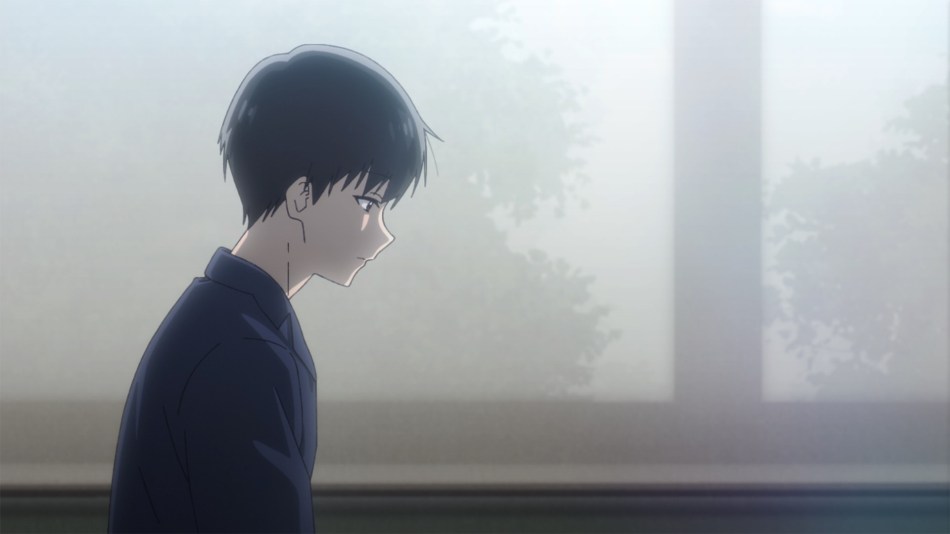
Episode Synopsis:
Akiyama presents his script to the club and soon takes on one of the lead roles, despite his concerns over his acting talent. As the gang fights against time and interruptions to finish their film, he begins to lean into the lessons of his own script, eventually reaching out to his estranged sister. As filming wraps and editing begins, Akiyama invites the club to see their idol, Shura Saionji perform, and we learn some intriguing details about the acclaimed actress.
Review:
We continue to focus on Akiyama in this episode – another teen unsure of what to do with his life. He’s struggling with the strained relationship he has with his mother and father, as well as the ways he’s had to push down his own desires to maintain his parents’ approval in the absence of his estranged siblings.
The contrast between how he and Hana process their feelings is fun to see – Hana is terrible at hiding her feelings and tends towards pouring out her emotions in large bursts, while Akiyama keeps everything buttoned up and puts up a pleasant and passive front, churning on the inside with what I can only imagine is an alarming amount of stress. Hana jumps on others’ suggestions because she isn’t sure what to do on her own, while Akiyama puts up token resistance before folding because he doesn’t want to lose his image as dutiful and reliable. They’ve both built their self-worth around how others see them, and it causes them a lot of pain.

That doesn’t mean that this episode is downbeat or sad, however. Akiyama legitimately enjoys working with the club, and their film project gives him a chance to work out some of his own anxieties by incorporating elements of his life into the script. Despite his parents’ disapproval, he still admires his sister, who aspired to become a poet – no easy feat even in a society that places a lot of value on art and culture. He incorporates her work into the story in a scene that catches even him off-guard and draws out a great performance from everyone involved.
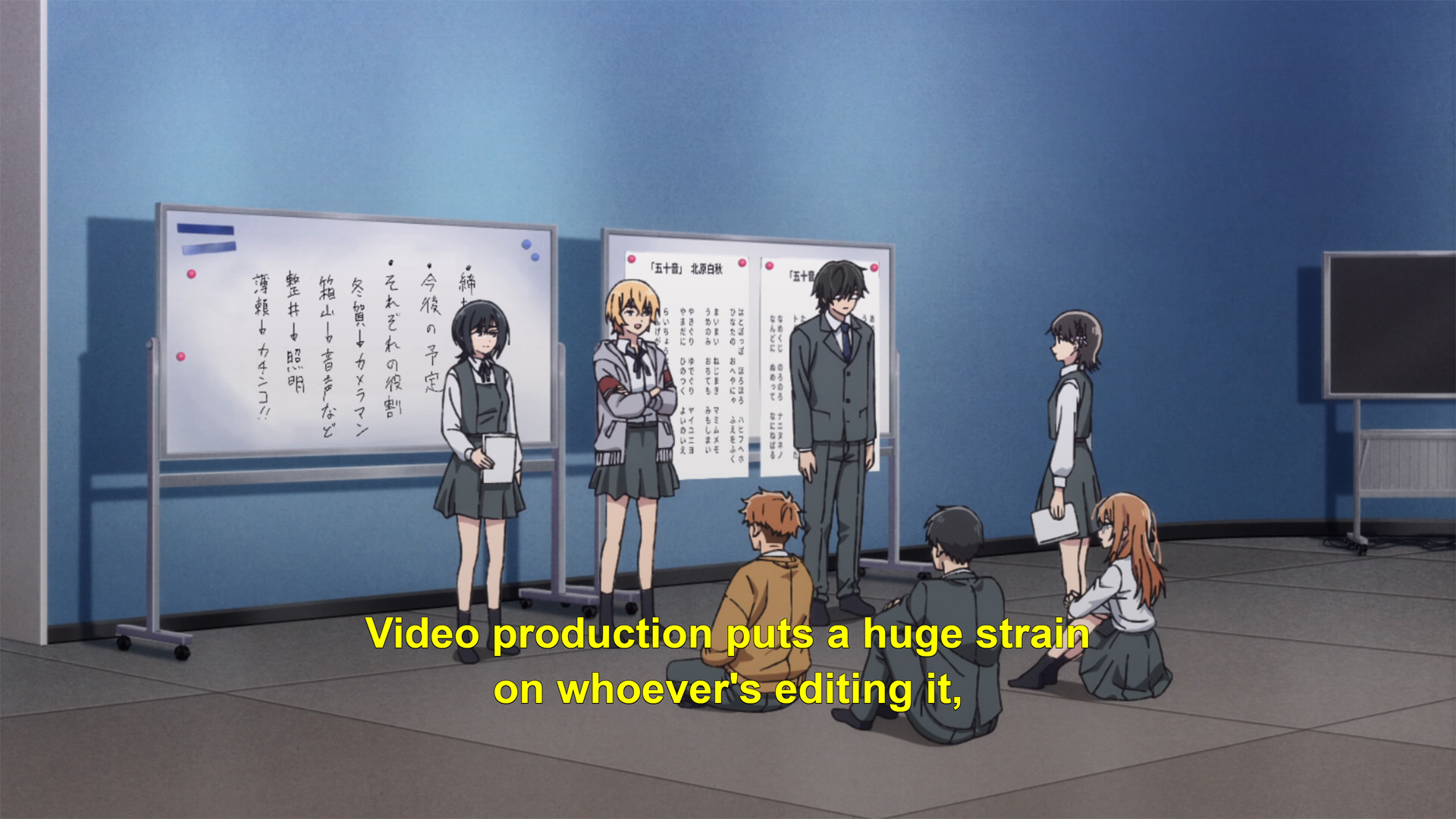
Adding to the fun is a set of scenes focused on the challenges of making a student film. Shooting and editing even a brief 8-minute short is daunting for students, and they’re competing for time with midterms and other schoolwork. Yet their worst enemy is the high school band, whose tuning and irregular practice schedule makes shooting in and around school a massive pain. I feel you, kids – few things get on the nerves like struggling around a schedule you have no control over.

Luckily, Toga’s “F— it, let’s roll!” attitude keeps everyone moving. While he comes off as a bit of a slacker at times, he really seems to flourish as a director, and he’s proving to be quite observant. He actually calls out Akiyama for not committing to his role – even if he wasn’t thrilled with the idea of acting, that doesn’t mean he shouldn’t put in the effort, especially with everyone else there to support him. It means a lot to Akiyama, whose isolation has made him focused on being a great individual student, but left him reluctant to rely on others. Toga was able to see through Akiyama’s “mask” and see that he needed help, even if he wasn’t aware of the full context.

We get a good deal of that context later when Akiyama finally reaches out to his sister Owari, who has actually made it as a poet and is now close friends with Shura Saionji. Akiyama brings the club to Shura’s performance as a way to reconnect, and his reunion with Owari is sweet to see. There’s a lot of feelings in there, but it’s brought out in an understated, natural way compared to the heightened-reality visuals we’ve gotten in some of the recitation scenes. It’s a fun change of pace for emotional turning points, and I hope we get to see more of their relationship as we move forward. Akiyama has proven to be an intriguing character with a lot going on, which makes me glad that we’re getting plenty of time to focus on him.
Summary:
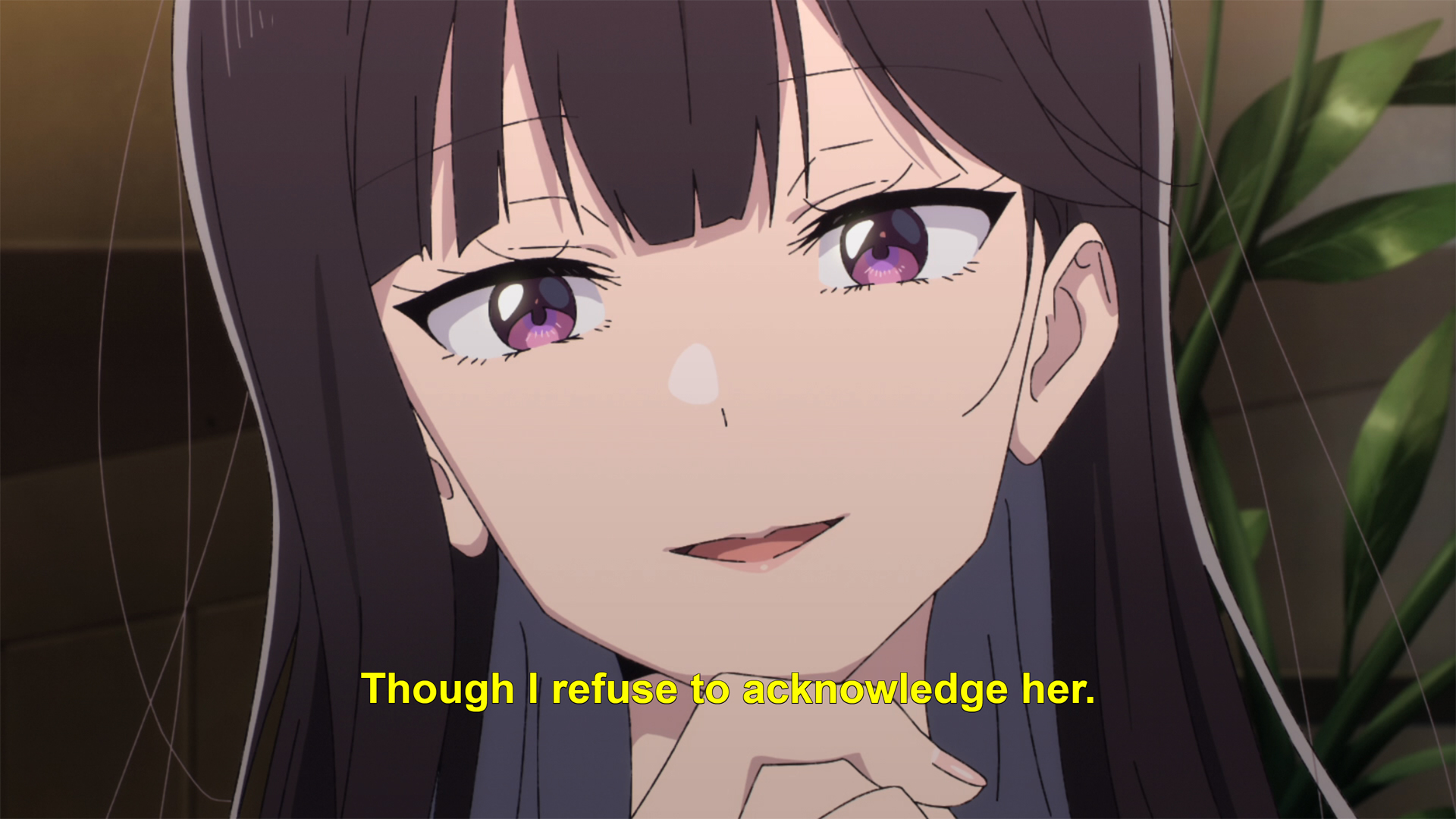
This episode and its predecessor form a bridge connecting the early days of the club to their drive towards the main competition. It also serves as an initial introduction to Shura Saionji, who has some serious villainous qualities, as if her raven hair and slightly gothic dress sense weren’t enough. Looks like we’re in for some capital-D Drama soon, folks!
 The Con Artists
Pingback: Flower and Asura – Episode 06 – The Con Artists
Pingback: Flower and Asura – Episode 08 – The Con Artists