

Episode Synopsis:
Frieren’s soul is weighed against Aura’s. As Frieren dominates Aura and orders her to commit suicide, she reminisces about the past. She remembers back to how she lost her entire village to demons and met Flamme. Upon becoming Flamme’s apprentice Frieren is taught to suppress her mana. A technique that is both a secret weapon to defeating demons and a dirty tactic in the realm of mages.
Review:
Scott, were you looking for that order of Main Battle Action? It’s over here and it’s wrapped in backstory bread.
Okay that analogy just got weird…and now I want a sandwich…
Aura’s death is actually the final climax of the episode and while it is ruthless on Frieren’s part, it is also definitely second fiddle to the buildup to that moment. This episode fares better than previous ones because it isn’t solely about fighting demons nor is it trying to split its focus. It provides the backstory to Frieren meeting Flamme, and while Frieren’s origin didn’t add much to her character (yet), her time with Flamme altered the way she conducts herself as a mage.
I say “yet” because I’m unclear if Frieren losing her whole village to demons is part of the reason she’s so emotionally stunted. It clearly sealed the deal for her in terms of her no-mercy take on demons, but it’s hard to ascertain much else about the situation since she’s apparently always been monotone/emotionally subdued?

I actually wish I had more backstory on Flamme to be honest. She just mentions that demons took everything from her and she hates them eternally now. Given how one dimensional they are as villains I guess that’s all we NEED but it still feels flimsy. Also, Flamme possess a seemingly grey set of morals that I would have loved more context for.
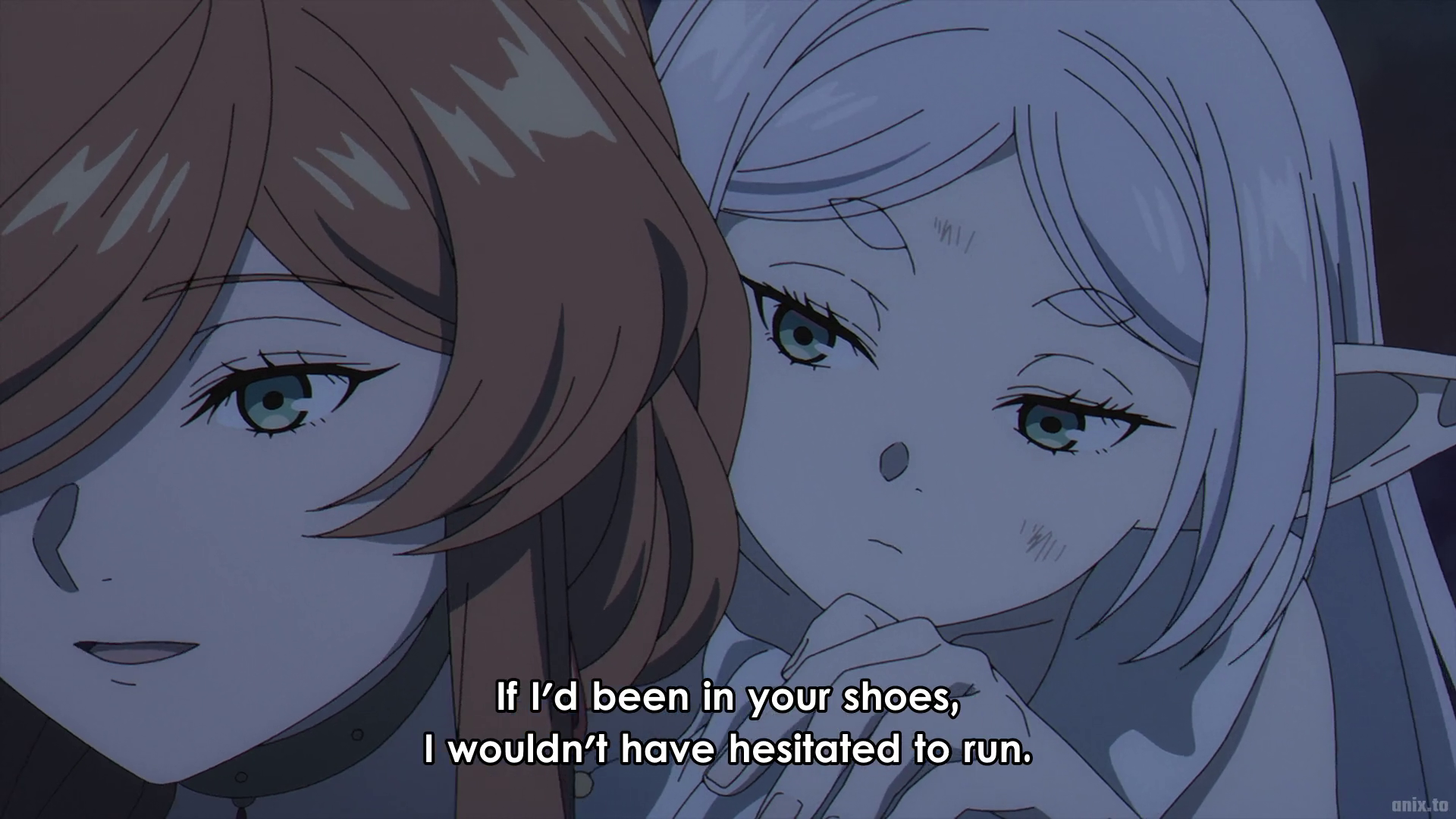
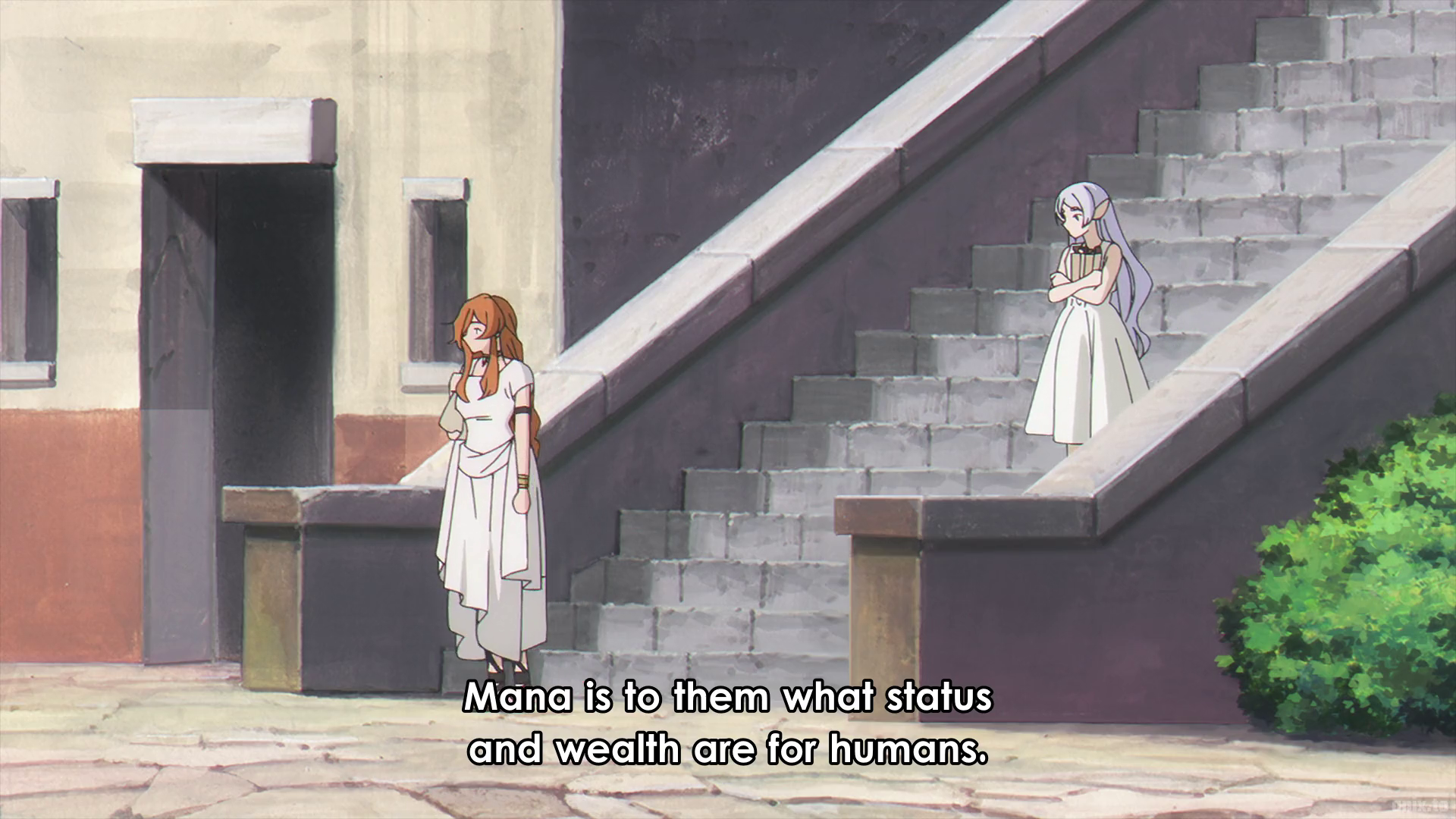
All that aside, I realized I am the last person to share my thoughts on demons due to the way the episode rotation fell. My first thought was that Pride is the deadliest sin. I like the built in weakness demons have in that they do not hide their mana reserve, and the world-building tidbit that their power structure is based on this metric. The weaker demons hide away or are destroyed because only the strongest perpetuate. I still lack clarity on how demons reproduce and their overall societal structure, but now we’ve got a better understanding of how their hierarchy works. The metaphor Flamme uses of this being like human wealth/birth-status is easy enough to understand.
My second thought was that their fighting style reminds me of the British. Back when I learned about the Revolutionary War in school, I thought to myself about how ridiculous the British mentality on battle was. The British army lined up on the battle field with all soldiers involved present and organized. It was a display of power, organization, and wealth and rather than battle, it looked like they were setting up a marching band. The fact that they lost to guerilla warfare tactics (considered dirty fighting) seemed like a no-brainer. When I think about it now, I never ceased to be amazed at how brilliant a fighting strategy it was.
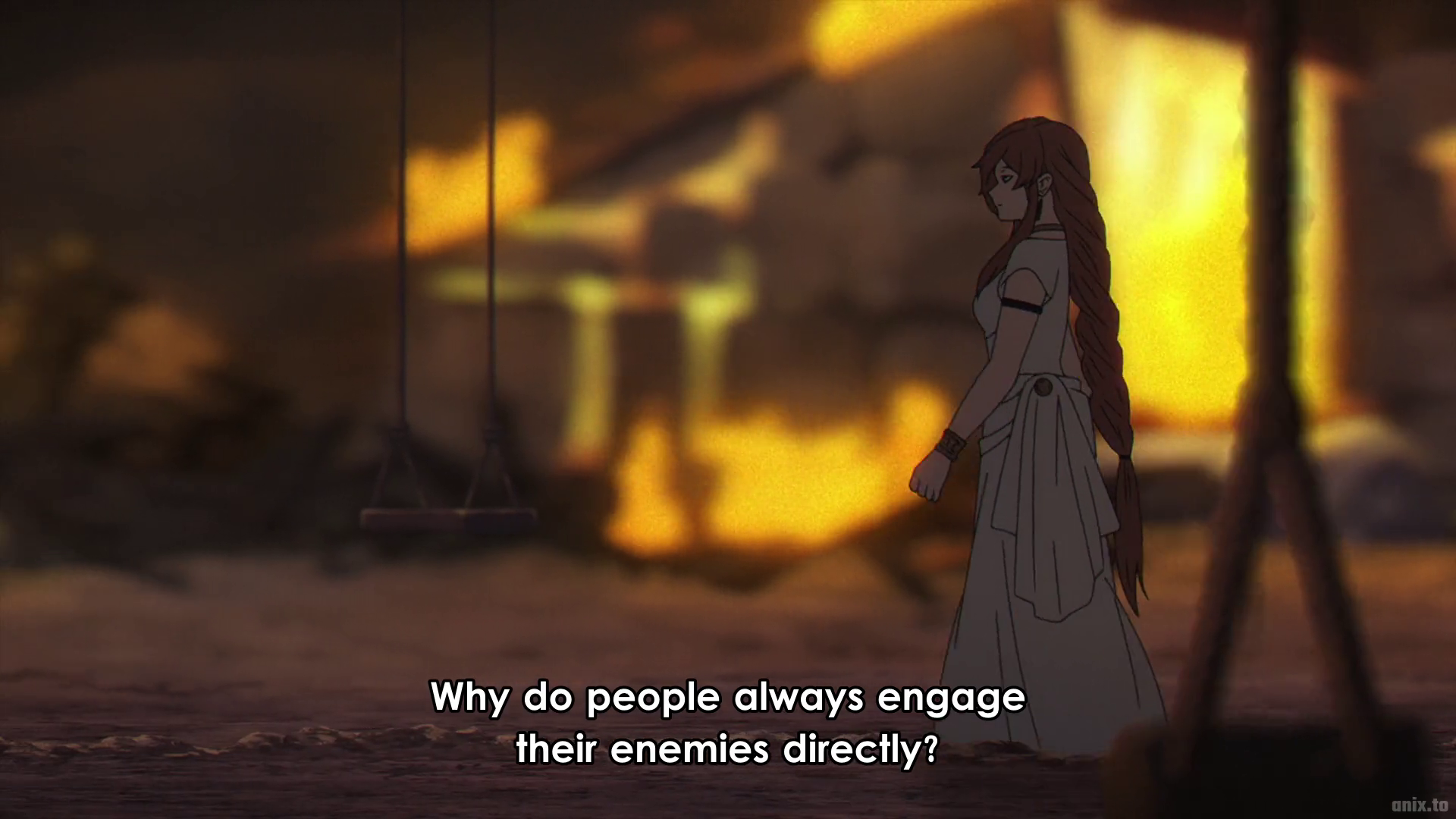
There’s a subtle world-building item that’s been brought to the surface here regarding mages. It appears they are meant to be up front about their power levels. Hiding your mana is a known tactic for surprising your enemy but once you are actually engaged in battle, you are meant to be up front about what you are packing.

This kinda fascinates me because it’s weirdly…impractical. Even the animal kingdom uses camouflage and deception in its grand design of predator and prey. Are mages of any species just…taught this way and literally nobody ever questioned it?? If we wrap this back to the demons, they are clearly skilled at learning deception to kill their targets (they learn to speak for the sole reason of trickery), but they haven’t evolved to learn their own weakness?
There’s an entire flashback segment of this episode where Flamme talks about demon society and about how having large amounts of mana is the definition of dignity to the demons. There is no benefit to mana suppression (outside of temporary stealth) because of this, so demons never learn to do it long term. I get the idea of hubris, but this seems strangely extreme for a species I assume wants to perpetuate long term. Within this part of the flashback, Flamme also mentions that demons haven’t changed since they were “monsters”, implying that they have indeed evolved from the state they were once in. Should they not have evolved again by now, despite them being individualistic? And if they are so individualistic, why do some of them move in groups?


This leads me to my last thought…
The demons remind me of viruses. They are killers with one singular focus; kill off all other high order life forms, propagate the species, and wield hella powerful magic. They masquerade as humans in terms of wearing clothes and speaking about families, but this is all a ruse in the way a virus imitates your own cells in order to infiltrate them and replicate themselves. They have no malice nor care for who they eliminate, and will kill seemingly without an ounce of prejudice. If you aren’t a demon, you are fair game; The End. They revel in bringing about death, and know no other reason for magic outside of this action. It took me a while to get to this idea but it’s intriguing to think about. All that being said, viruses adapt to situations and as stated earlier, it seems the demons do not. It almost makes me wonder if they only reason they aren’t all dead by now is that Frieren is too lazy to hunt them all down systematically.
I’m not sold on demons overall. I still don’t get what they eat, how they reproduce, what their overall endgame is as a species, and why the heck they haven’t figured out their one true weakness and evolved to compensate for it. I’m hoping we don’t see too much of them in the future. If we do, I’d like to see them more fleshed out.
Overall though, this episode was solid as it gave reasoning behind Frieren’s life as a mage, her reason for suppressing her magic, and her ruthless attitude towards demons.

Summary:
I don’t feel like we needed high stakes bad guys, and I was perfectly content with the price of buy in for this show being that our heroes fought off the Evil Demon King long ago. The flashbacks to towns being destroyed were good enough for me as I am way more invested in Frieren’s journey of personal/emotional discovery. That being said it was interested to get some background for Frieren’s actions and some world-building for how mages function.
 The Con Artists
Pingback: Sousou no Frieren – Episode 11 – The Con Artists